Monday, December 19. 2011
Concept vending machine knows exactly what you want
Via Dig Info TV
-----
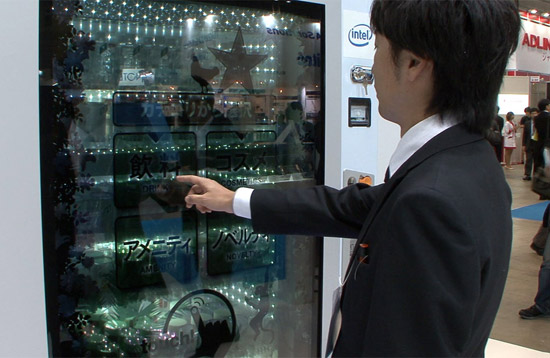
This concept model for a next-generation vending machine, which features a see through display, is being developed by Sanden, a large manufacturer of vending machines, in conjunction with Okaya Electronics and Intel.
This concept model has a vertical, 65-inch, Full HD transparent display. The products behind the display can be seen through the glass, and you can simultaneously see high definition text, pictures, and Flash animations on the display.
"This vending machine uses the Intel SandyBridge Core. It features Audience Impression Metric, or AIM, and can do anonymous face recognition. So this machine can recognize whether customers are male or female, or old or young."
When there aren't any customers, the machine shows a large digital clock and animations, to attract the attention of people passing by. If a customer stands in front of the machine, it estimates their attributes from anonymous video analysis, and shows advertising content to match the customers demographic.
"In this demo, we're suggesting that vending machines could be used to purchase luxury items, such as cosmetics and wine. The machine also has a public safety mode in times of emergency, which shows information such as evacuation routes."
"I think this machine could be used in lots of ways, depending on customers' imagination. It has a great many possibilities, so we'd like to get ideas from everyone, rather than just using it as a regular vending machine."
Tuesday, December 13. 2011
Paris creates the largest Google Earth display ever
Tuesday, December 06. 2011
Senseg demonstrates new technology that creates textures on flat screens
Via gizmag
-----
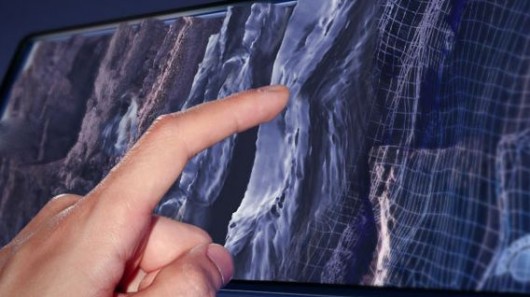
What if you could feel what's on your television screen? Tech company Senseg is working on a way for you to someday be able to do just that, and recently demonstrated a prototype tablet that is already able to make that magic happen.
The tech is made possible using an electrostatic-field-based system that allows different parts of the screen to produce varying degrees of friction. So, while you're touching a flat screen, it feels like you're touching something textured instead. Your traditional screen is turned into what Senseg is calling a "Feel Screen," allowing you to feel textures, contours and edges of things that are displayed in front of you.
Feel Screens don't rely on moving parts in the screen itself, and could be integrated into devices we use today such as smartphones, tablets, and televisions. Senseg's technology is still very much in prototype-form, but could be headed our way in the next 24 months.
Quicksearch
Popular Entries
- The great Ars Android interface shootout (131714)
- Norton cyber crime study offers striking revenue loss statistics (102815)
- MeCam $49 flying camera concept follows you around, streams video to your phone (100739)
- Norton cyber crime study offers striking revenue loss statistics (59044)
- The PC inside your phone: A guide to the system-on-a-chip (58949)
Categories

Show tagged entries
Syndicate This Blog
Calendar

|
December '11 |

|
||||
| Mon | Tue | Wed | Thu | Fri | Sat | Sun |
| 1 | 2 | 3 | 4 | |||
| 5 | 6 | 7 | 8 | 9 | 10 | 11 |
| 12 | 13 | 14 | 15 | 16 | 17 | 18 |
| 19 | 20 | 21 | 22 | 23 | 24 | 25 |
| 26 | 27 | 28 | 29 | 30 | 31 | |